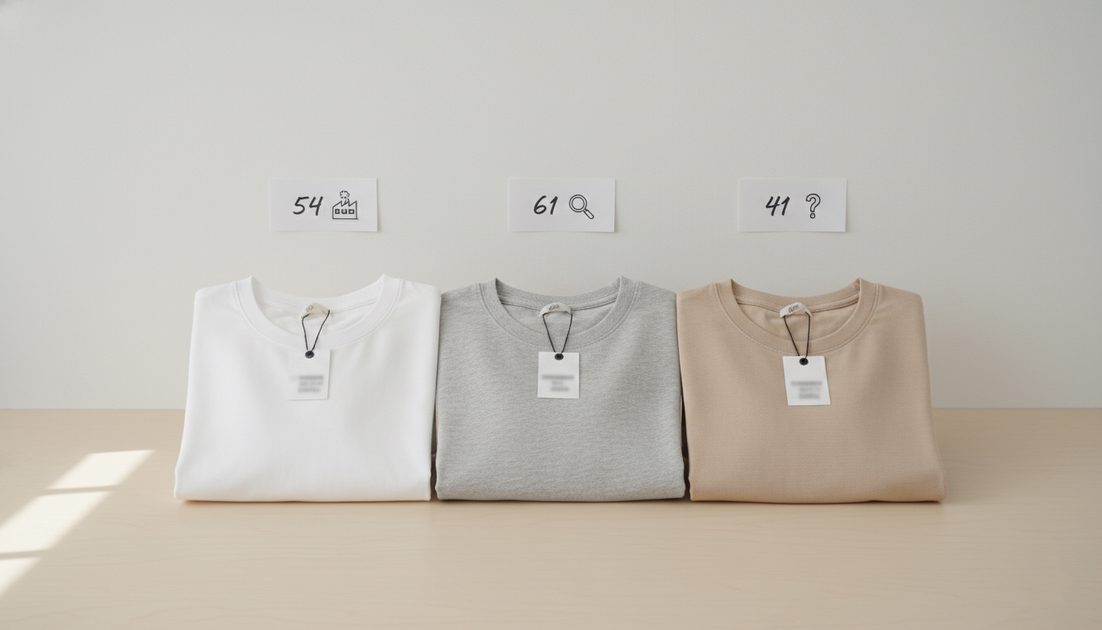
Every year Fashion Revolution puts out this big report. They look at 250 big fashion brands and ask: where do your clothes come from? Who made them? Are you telling anyone?
Then they give each brand a score from 0 to 100.
I read the 2026 report so you don't have to. Here's what actually matters for people who shop at Zara, H&M, and Uniqlo.
The short version
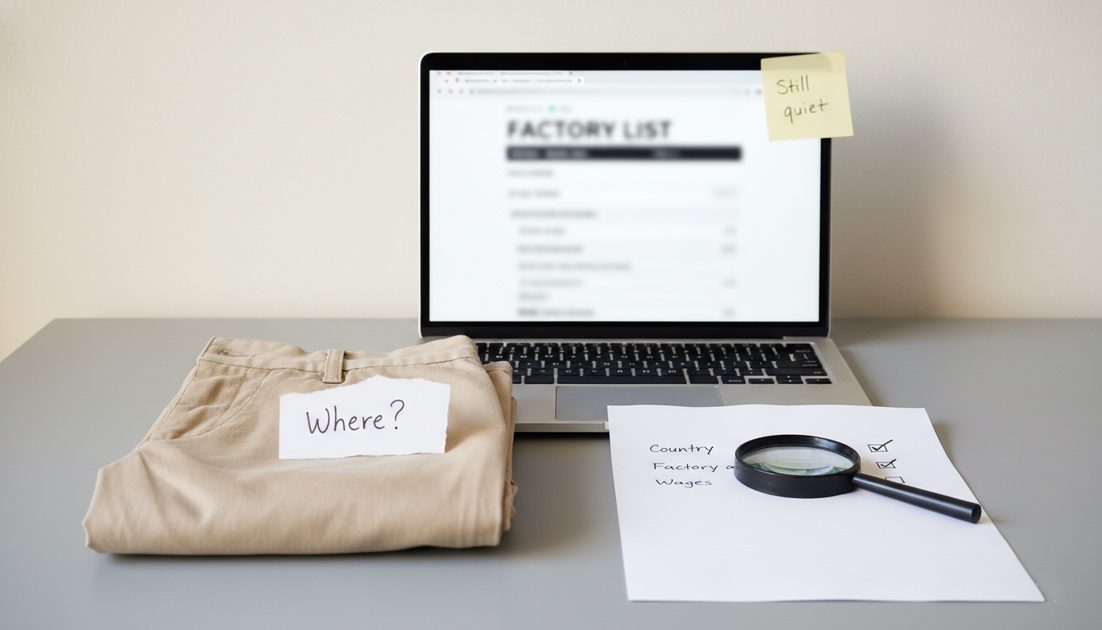
Most brands still aren't being honest. But a few are getting better. And one of your favorites? Probably worse than you think.
Zara – Score: 54
Up from 48 last year.
Zara finally started publishing more factory lists. You can actually go on their website and see where most of their clothes are made. That's new.
What this means for you: They're not hiding as much. But 54 is still a D grade. They tell you the country. Not always the specific factory address.
I looked up a jacket I bought last month. Found the country. Couldn't find the actual building. Better than nothing. Still not great.
What Zara still won't say: How much the workers get paid. How many hours they work. What happens when things go wrong.
H&M – Score: 61
H&M has been doing this longer than anyone. They started publishing factory lists back in 2013. So their score is higher.
61 is a C minus. Not something to celebrate. But better than most fast fashion brands.
What this means for you: H&M tells you more than Zara does. You can find factory names, addresses, even how many workers are there.
But here's the catch: They publish the info. That doesn't mean the factories are good. Just that they're not lying about where they are.
I bought a sweater from H&M last year. Looked up the factory. Found it on a map. Felt good for about five minutes. Then I realized I still don't know if the workers are okay.
Uniqlo – Score: 41
This one surprised me. And not in a good way.
Uniqlo doesn't want to play the game. They publish almost nothing compared to Zara and H&M. No factory lists. No worker info. Nothing.
What this means for you: You know less about your Uniqlo clothes than almost any other big brand. That's not an accident. That's a choice they're making.
I love my Uniqlo leggings pants. Wearing them right now. But finding info about where they came from? Impossible.
What the report doesn't tell you
A high score doesn't mean a brand is good. It means they're good at reporting.
A low score doesn't always mean they're worse. Just that they're quieter.
Some small brands score 80 or 90. But they make expensive clothes. Not everyone can afford that. The report knows this. They just don't say it out loud.
How I'm using this info
Not boycotting anyone. That's not realistic for me.
But I think differently now. When I buy from Uniqlo, I know I'm buying from a brand that chooses to stay quiet. When I buy from H&M, I know they're trying a little harder. Still not great. Just less bad.
Here's what changed: I buy less from Uniqlo than I used to. Not nothing. Just less. And I look for sales at H&M instead of buying full price from Zara.
Is that making a difference? Probably not. But it makes me feel less stupid about my choices.
One thing I still don't know
The report doesn't say what "good" looks like. Is 61 good enough? Is 41 a failure? They don't give an answer.
So I'm making my own. For me, any brand under 50 gets a second look before I buy. Above 60, I feel fine. That's not science. That's just what helps me sleep at night.
The real number that matters
Fashion Revolution says a truly transparent brand would score around 80.
None of the fast fashion brands are close.
So keep reading tags. Keep asking questions. Keep being annoyed that you can't find answers.
That's what the report is really for. Not to make you feel guilty. To make you curious.
No comments yet — be the first to share a thought.