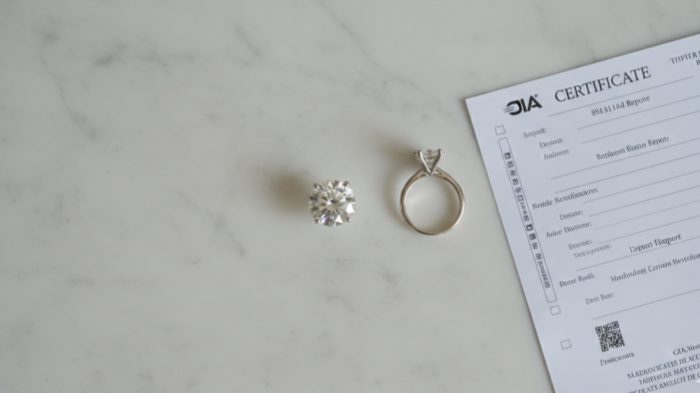
There was a time when buying a diamond meant walking into a jewelry store, sitting across from a salesperson, and trusting that the price on the tag was fair. You had no way to compare. No way to check. No real way to walk out and come back with better information.
Blue Nile changed that. And in doing so, it changed the whole fine jewelry industry.
What Shifted When Fine Jewelry Moved Online
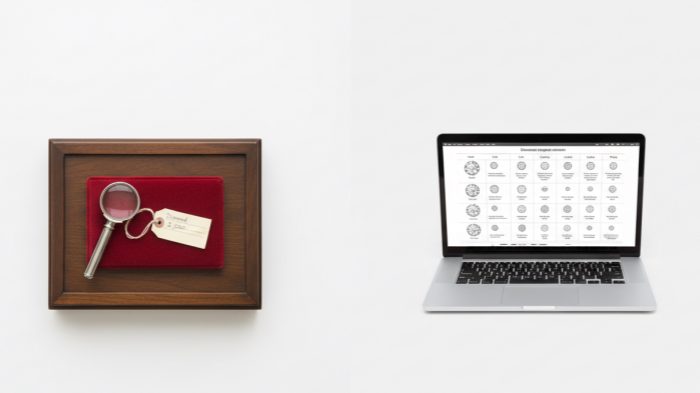
Fine jewelry was one of the last things anyone thought would sell well online. It's expensive, feels like a big deal, and — for most people — a purchase they make only a few times in their life. The common sense said customers would always want to see a diamond in person before spending thousands of dollars on it.
That common sense turned out to be wrong.
When Blue Nile launched in 1999, it offered something traditional jewelers didn't: transparency. Customers could look through thousands of diamonds, filter by cut, color, clarity, and carat, and see exactly how each thing affected the price. The markup was out in the open. The stock was searchable. The information was there for anyone willing to look.
That shift — from unclear, relationship-based selling to clear, information-driven shopping — is what changed the market.
Why Blue Nile Became a Reference Point
Blue Nile didn't just build a jewelry website. It built a new kind of buying experience that became the standard others measured themselves against.
A few things set it apart early on. First, its stock. Rather than keeping physical inventory, Blue Nile pulled diamonds from a network of suppliers, which meant its selection was way bigger than any single store could show. Second, its pricing. Without the costs of physical retail locations, Blue Nile could offer lower markups — and pass those savings on. Third, and maybe most importantly, its teaching approach. The site treated customers as capable adults who could learn to make their own choices, rather than relying on a salesperson to push them toward a certain pick.
That mix — huge selection, good prices, and real education — made Blue Nile a benchmark not just for buyers but for the whole industry.
Why Shoppers Embraced the Online Model
The appeal was immediate for certain kinds of buyers — especially those who hated high-pressure sales, those who wanted to research fully before committing, and those who were fine making big purchases online.
But over time, more people came around. Here's why:
Easy without giving anything up. Shopping at midnight, comparing dozens of stones in minutes, coming back to the same search days later — none of that is possible in a regular store.
Seeing prices clearly. Online stores made it easy to see what a 1.0ct G VS2 round brilliant diamond usually costs. That visibility made inflated retail markups harder to justify.
No pressure. Not having a salesperson waiting for you to decide is genuinely helpful for a lot of shoppers. Time to think means time to choose well.
Smarter buyers. The more research a buyer does, the more confident they tend to feel — and the happier they are with their purchase after the fact.
The New Buyer Journey vs. Traditional Shopping
In a regular jewelry store, the sales process shapes what the buyer does. A customer walks in with a rough idea, a salesperson asks a few questions, and the options get narrowed down based on what's in the case. The customer rarely sees a price-to-quality breakdown. They rarely compare five stones side by side. They mostly trust the person across the counter.
Online, the whole thing flips. The buyer starts with research. They learn the basics of diamond grading. They set a budget and see what that gets them. They compare stones across different factors before ever thinking about a setting. By the time an online shopper adds something to their cart, they often know more about what they're buying than someone who spent two hours in a jewelry store.
This isn't a knock on regular stores — good jewelers provide real value. But the information gap that once defined fine jewelry shopping has changed for good.
The Role of Education in Online Diamond Buying
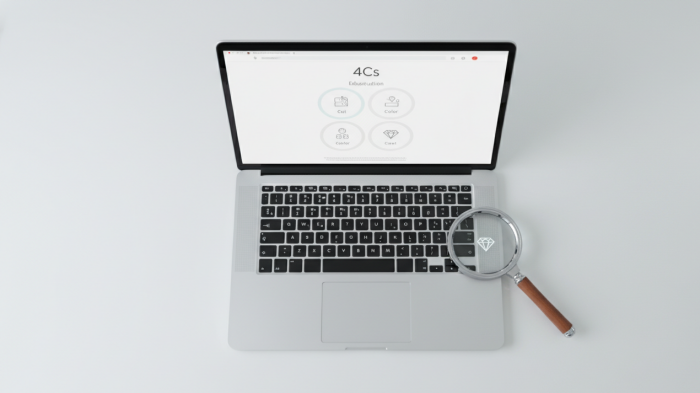
One of the most overlooked parts of Blue Nile's model is how seriously it took teaching its customers. Its learning resources — explaining the 4Cs, grading reports, setting styles, and metal types — weren't marketing materials dressed up as helpful info. They were genuinely useful.
That education matters because diamonds are not easy to understand. The things that affect value aren't always the things that affect how they look. A diamond graded VS1 and one graded VS2 may look totally identical to your eyes — but they can be very different in price. Knowing that lets buyers make smarter trade-offs.
The Diamond Basics That Matter Most
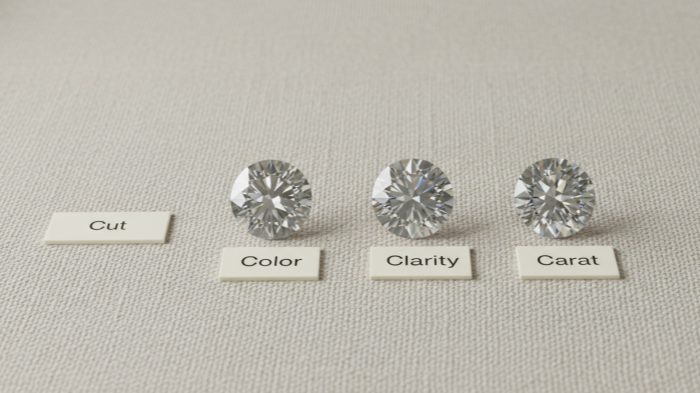
For most buyers — especially those buying an engagement ring — a few things matter the most:
Cut quality is the most important thing for how it looks. A well-cut diamond will look shinier than a higher-color, higher-clarity stone that's cut poorly. Put cut above everything else.
Color matters more in bigger stones and certain settings. In a simple setting, color is easier to see. In a halo or pavé setting, the smaller diamonds around it make slight color differences harder to spot.
Clarity can often be compromised without changing how it looks. Most little marks in VS2 or even SI1 diamonds are invisible to your eyes. Going below SI1 means you need to look closely at the stone's specific grading report.
Carat weight is not the same as size. A well-cut 0.90ct diamond can look bigger than a poorly cut 1.0ct stone. Focusing only on carat weight can mean paying extra for a stone that looks smaller than you expected.
Customization Became Normal, Not Rare
In regular stores, customization — picking your own diamond and putting it with a specific setting — was either not available or only for high-end custom jewelers with very high price tags.
Online stores made customization the usual way of doing things. Blue Nile's model of picking a loose diamond and then choosing a setting separately is now standard across the industry. Shoppers can mix and match thousands of combinations, change metal type, ring style, and diamond grade on their own, and see the final price update right away.
That flexibility changed what people expect. Buyers who get this much control don't want to go back to choosing from whatever happens to be in a display case.
Price Perception Changed Because Comparison Became Effortless
Before online shopping, comparing prices for fine jewelry meant visiting multiple stores, relying on your memory, and hoping you were making fair comparisons between stones with similar specs. In practice, most people couldn't do this well.
Online, you can sort 5,000 diamonds by price per carat, filter to the exact same specs, and instantly see the range. That easy comparison completely changed how buyers think about price.
It also showed something important: the market for diamonds works better than many buyers assumed. Similar stones from different suppliers tend to fall in a predictable price range. Prices that are way off — either surprisingly cheap or noticeably expensive — are worth looking into.
Healthy Ways to Use Comparison Tools
Price comparison is genuinely helpful, but it can also lead buyers to focus on the wrong things. A few tips:
Compare stones with the exact same grading, not just similar ones. A G VS2 Excellent cut is not the same as a G VS2 Very Good cut.
Use price as a filter, not the final decision. Once you've narrowed to similar stones, let appearance (cut quality, fluorescence, where the inclusions are) guide your final choice.
Be careful with prices that seem too low. A stone priced 20% below similar certified diamonds needs a closer look, not immediate excitement.
Trust Had to Be Rebuilt for the Internet Era
Spending several thousand dollars online — on something you can't see in person — needs a different kind of trust than walking into an established local jeweler. Blue Nile and the online fine jewelry industry had to build that trust on purpose.
The tools they used became standard across the category:
Third-party grading reports. Diamonds certified by GIA (Gemological Institute of America) or AGS come with an independent check of their quality. That certification comes from a group with no financial interest in the sale, which gives real peace of mind.
Return policies. Generous return windows — Blue Nile offers 30-day returns — lower the risk of an online purchase a lot. If a ring arrives and doesn't meet what you expected, you have options.
High-quality images and video. Modern sites offer 360-degree views and close-up video of each stone. This doesn't fully replace seeing it in person, but it gives way more information than a single photo.
Customer reviews and clear ratings. Social proof matters. Thousands of verified reviews tell you that other buyers have gone through the same process and came out happy.
Myths vs. Reality About Buying Fine Jewelry Online
Myth: You can't really judge a diamond without seeing it in person.
Reality: For certified diamonds, the grading report gives you hard data on quality. Good images and cut grading fill in a big part of what seeing it in person gives you. Many experienced buyers have been completely happy with online purchases.
Myth: Online prices are always lower.
Reality: Online prices are often competitive, but not always the cheapest. Local independent jewelers and estate sales can offer good value. What online does well is make pricing visible and easy to compare — which is different from being cheaper across the board.
Myth: Returns are a hassle and no one actually does it.
Reality: Most reputable online fine jewelry stores have straightforward return policies. Blue Nile's 30-day return policy and free return shipping makes the process pretty low-risk.
Myth: Online jewelry is lower quality than what you'd find in a store.
Reality: A GIA-certified diamond sold online has the same certification as one in a physical display case. The quality of the stone is documented by an independent group, no matter where it's sold.
A Practical Checklist for Shopping Online Like a Confident Buyer
Before You Buy
Set a firm budget and know where you're willing to compromise (carat vs. cut quality vs. clarity)
Learn the 4Cs at a basic level — cut, color, clarity, carat — and understand which matters most for what you care about
Check the store's return policy, certification standards, and customer service availability
Make sure the site uses GIA or AGS certifications, not their own in-house grading
When Choosing a Diamond or Gemstone
Put cut quality above everything else for round brilliant diamonds
Look at the actual grading report, not just the quick specs on the listing
For color and clarity, think about whether differences are visible to your eyes at the carat weight you're looking at
Watch any available video or 360-degree images carefully
For colored gemstones, ask if they've been treated and try to get extra images
After Purchase
Look over the piece carefully when it arrives — before the return window closes
Get the jewelry appraised on your own if it's a big purchase
Keep all paperwork: grading reports, receipts, and packaging
Add the piece to your home or renters insurance
How Online Fine Jewelry Changed What "Luxury" Feels Like
Traditional luxury jewelry stores were as much about the experience as the product. The velvet trays, the lighting, the attentive service — these were part of the purchase. For some buyers, that setting added real value. For others, it added pressure.
Online fine jewelry redefined what a big purchase could feel like. Luxury, in this model, is about good information, an easy process, and confidence in the result — not the fancy feel of a store. A buyer who researched their purchase well, picked exactly the stone and setting they wanted, paid a fair price, and got a nicely packaged ring at their door can have a deeply satisfying luxury experience without ever stepping into a store.
That's not a watered-down version of luxury. For many modern buyers, it's a better one.
FAQ About Blue Nile Jewelry and Online Fine Jewelry
Is buying fine jewelry online a good idea for engagement rings?
For the right buyer, yes. If you're willing to do basic research on diamond certification and the 4Cs, and you're comfortable with an online purchase backed by a solid return policy, online sites like Blue Nile offer great selection, good prices, and a low-pressure experience. Many couples have been very happy with online engagement ring purchases.
What is the biggest advantage of shopping online for diamonds?
Transparency. The ability to compare thousands of certified stones side by side — with full pricing, grading data, and images — gives buyers a level of market visibility that's just not possible in regular stores. That transparency tends to create more confident buyers and more satisfying purchases.
What is the biggest risk of buying fine jewelry online?
Not being able to see a stone in person is the most common concern. A grading report tells you objective quality numbers, but it doesn't tell you how a stone looks in natural light, how it looks face-up, or whether its small marks are placed in a way that affects how it looks. Looking at high-quality video and buying from a store with a generous return policy lowers this risk a lot.
How do I avoid regret with online fine jewelry?
Do your research before you buy, not after. Understand the grading criteria, compare similar stones, and don't focus too much on carat weight at the cost of cut quality. When the ring arrives, check it carefully within the return window — in different lighting and in person. Most regret in fine jewelry purchases comes from not knowing enough and making rushed choices. Online shopping, done right, removes both of those problems.



No comments yet — be the first to share a thought.