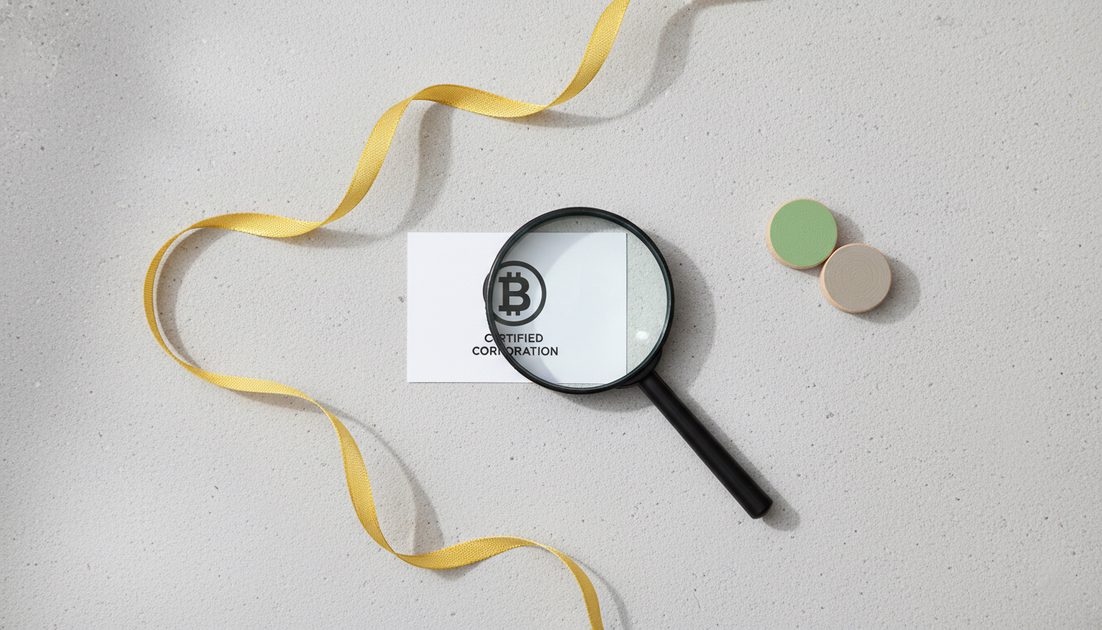
You've seen the logo. Little black letters inside a circle. B Corp. On Patagonia. On Allbirds. On your friend's overpriced detergent.
I thought it meant "good company." Like, certified good. Like the government checked and said "yep, these guys are fine."
That's not really how it works.
I looked into it because I got tired of feeling dumb every time I saw the logo. Here's what I learned. And what surprised me.
What B Corp actually is
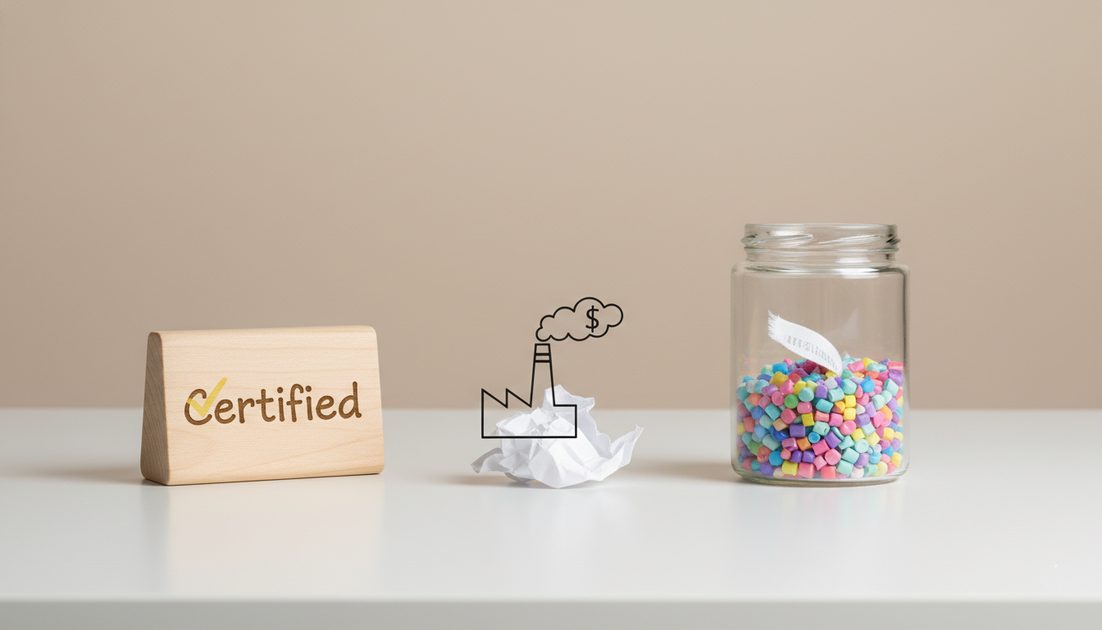
B Corp is a certification from a private group called B Lab. Not the government. Not a non-profit that anyone voted for. Just a company that checks other companies.
To get certified, a company answers a bunch of questions. About their workers. About the environment. About how they treat customers. They get points. If they score high enough, they pay a fee and get to use the logo.
The questions are real. The bar is higher than nothing. But it's not a law. It's not the FBI showing up at their door.
What B Corp does well
It makes companies write stuff down.
Before B Corp, a brand could say "we care about workers" and that was it. No proof. No numbers. Now they have to answer things like "what's your pay gap between men and women?" and "what percentage of your materials are recycled?"
They don't have to be perfect. They just have to be honest about where they are.
Also? The certification makes companies compete a little. Patagonia has it. Now other outdoor brands want it too. That's a good thing.
What B Corp does NOT mean
It doesn't mean the company is fully ethical.
You can be a B Corp and still use plastic. Still ship products from the other side of the world. Still have a CEO who makes 100 times what their factory workers make. The score just has to be high enough. Not perfect.
It doesn't mean the government checked them.
This one got me. I assumed there was some official agency behind the logo. There isn't. B Lab is a private company. They can change the rules whenever they want.
It doesn't mean the company's products are sustainable.
A bank can be a B Corp. A software company can be a B Corp. The certification looks at the whole business, not just the stuff you buy. So a clothing brand could make terrible t-shirts but treat their office workers really well and still get certified.
How I use B Corp now
I don't trust it alone anymore.
If a brand has the logo? Cool. Good start. I'll look at them.
If a brand doesn't have it? I don't cross them off. I just dig a little more. Check their website. See if they talk about their factories. Look for other certifications like Fair Trade or Organic.
B Corp is a clue. Not the whole story.
One example that changed my mind
There's a shoe company I like. B Corp certified. Great. But I read their report anyway. Turns out most of their materials are still virgin plastic. Recycled? No. Just less bad than other shoe companies.
They were honest about it in the report. I'll give them that. But the logo on the box didn't tell me that. I had to go find it myself.
What I wish someone told me earlier
The logo means "this company answered a bunch of questions and paid a fee."
That's it. That's the honest truth.
Does that mean they're better than companies without it? Probably, yeah. Most of the time. But not always. And definitely not perfectly.
My rule now: B Corp is a yellow light. Slow down, look around, keep going. Not a green light to buy without thinking.

No comments yet — be the first to share a thought.