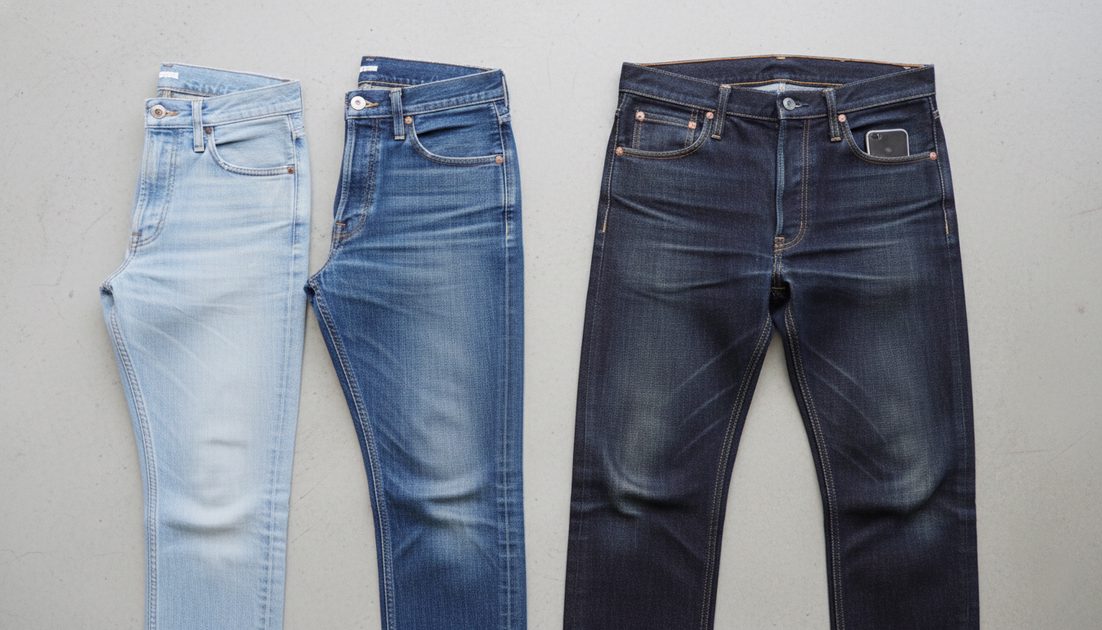
I've owned cheap jeans and expensive jeans. I've been disappointed by both.
Some $200 jeans felt like cardboard. Some $30 jeans fell apart in two months. One pair of $50 jeans lasted me five years. I still don't fully understand why.
So I dug into what actually changes when you spend more money. Not marketing talk. Just fabric weight, stitching, and how long stuff lasts.
Here's what I learned. Hope this saves you some cash and some bad buys.
$20 – $40 (Target, Old Navy, H&M basic lines)
What you get: Stretchy denim. Lots of elastane or spandex. Soft out of the gate.
The good: They fit right away. No break-in period. Cheap enough that you don't care if you spill coffee on them.
The bad: The stretch wears out. After six months, the knees bag out. The waist gets loose. The thighs rub thin. These are not "wear for years" jeans.
Who should buy: Someone who changes sizes often. Someone who just needs jeans for weekends. Someone on a tight budget who knows these are temporary.
Skip if: You want one pair to last through next winter.
My pick at this price: Target's Universal Thread. $30. Lasted me eight months before the thighs gave up. Not bad for the money.
$40 – $80 (Uniqlo, Levi's mainline, Gap, American Eagle)
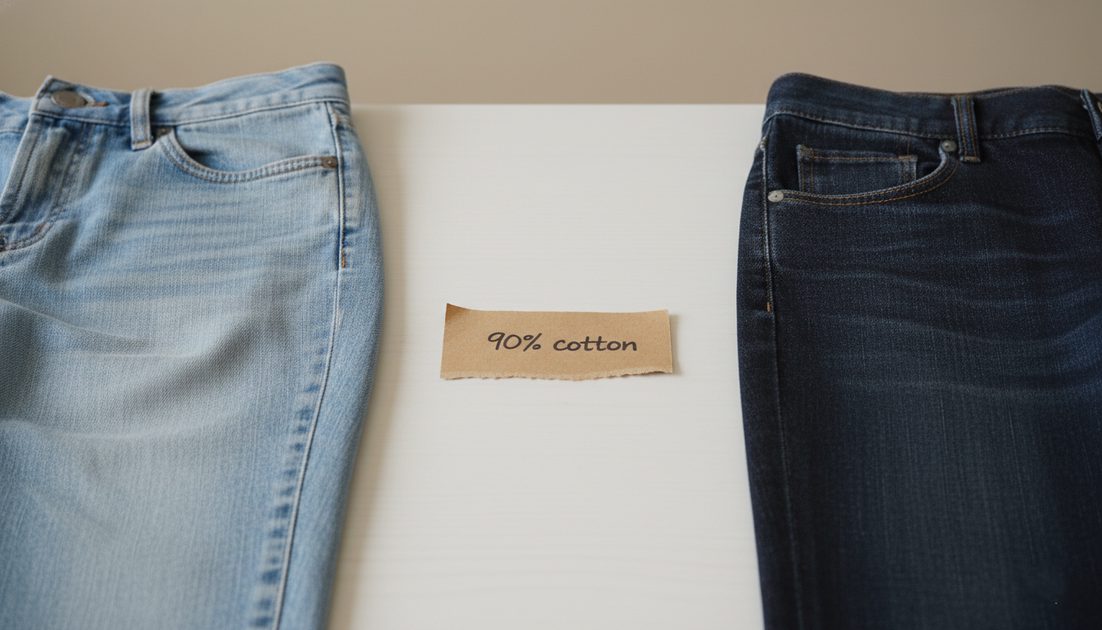
What you get: Better fabric weight. Less stretch. Actual cotton percentages over 90% usually.
The good: This is the sweet spot. You start seeing reinforced pockets. Tighter stitching. Jeans that keep their shape after washing.
The bad: Some brands still cut corners. Hidden ones, like the zipper or the inner waistband. You won't know until six months in.
Who should buy: Almost everyone. Most people don't need more than this.
Skip if: You're hard on jeans. Construction work. Daily heavy use. You'll blow through these too.
My pick at this price: Uniqlo selvedge when it's on sale for $50. Or Levi's 501 shrink-to-fit for $70. Both have lasted me over two years.
$80 – $130 (Madewell, Everlane, Levi's Premium, Nudie Jeans on sale)
What you get: Raw or selvedge denim sometimes. Better hardware – buttons feel solid, zippers are YKK or better. Stitching is straight and tight.
The good: These feel different. Heavier. Stiffer at first, but they break in to your body. Not the other way around.
The bad: Break-in period sucks. Like two weeks of stiff knees and weird creases. Worth it after, but annoying.
Who should buy: Someone who wants one good pair for years. Someone who hates shopping and just wants to buy once.
Skip if: You want easy, soft jeans out of the box. These aren't that.
My pick at this price: Everlane's 100% cotton straight jean. $98. Took three weeks to break in. Now they're my favorite pants.
$130 – $200 (Nudie Jeans, G-Star, A.P.C. on sale, some Japanese brands)
What you get: Better raw denim. Slower production. Actual craftsmanship you can see and feel.
The good: These age beautifully. The fades come in where you sit, where your phone sits. They become your jeans. Not just a pair of jeans.
The bad: The price. Also, some people find raw denim uncomfortable. It's thick. It doesn't stretch. You have to commit.
Who should buy: Denim nerds. People who keep jeans for five-plus years. People who think of jeans as an investment, not a purchase.
Skip if: You're not patient. You don't want to think about your clothes that much.
My pick at this price: Nudie Jeans Grim Tim on sale for $150. Free repairs for life at their stores. That alone almost makes the price worth it.
What I've learned after too many jeans
Price does not equal quality. I've had $200 jeans that stretched out weird. I've had $40 jeans that held up fine.
The real difference is fabric weight and cotton percentage. Over 90% cotton? Good sign. Under 70%? Those are basically sweatpants disguised as jeans. They'll bag out fast.
Also, wash your jeans less. I know. Everyone says this. But cold water, inside out, hang dry. That alone doubles the life of cheap jeans.
One thing I still mess up
I buy jeans that fit tight in the store. Tell myself they'll stretch. Sometimes they do. Sometimes they don't. I've wasted money on jeans that never felt right.
Now I buy for how they feel now. Not how they might feel later.


No comments yet — be the first to share a thought.